
Claude API
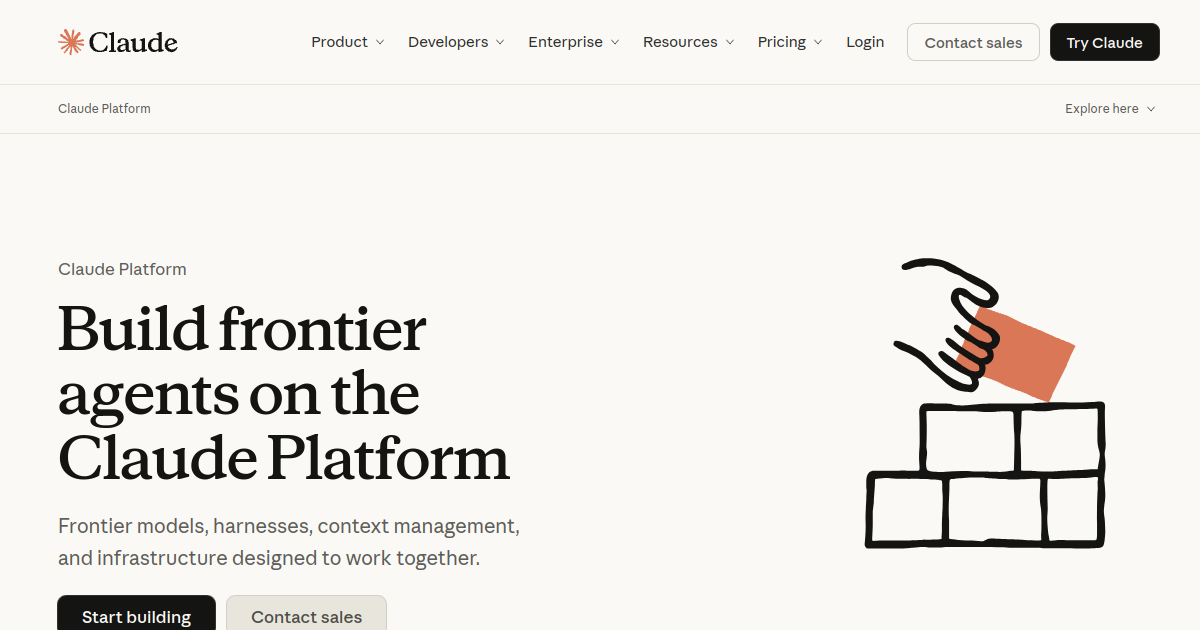
What is Claude API?
TL;DRClaude API is Anthropic’s developer platform for building AI applications, agents, coding tools, assistants, and production workflows with Claude models through usage-based APIs and developer tooling.
- Access Claude models through developer APIs
- Build AI agents, coding tools, and app workflows
- Supports tool use, web search, files, vision, and structured outputs
Explore with AI


About
Claude API by Anthropic lets developers build AI products, agents, coding tools, internal workflows, and customer-facing assistants using Claude models. It is the developer platform behind Claude, giving teams direct API access to Anthropic's models for text generation, reasoning, coding, document analysis, vision, tool use, and long-context workflows.
The platform is built for production AI development. Developers can use the Messages API for fine-grained model prompting, build custom agent loops, connect Claude to external tools, process files and images, return structured outputs, run web search and fetch workflows, and use prompt caching or batch processing to reduce cost. Claude API is especially strong for applications that need careful reasoning, code generation, instruction following, multi-step workflows, and reliable responses with clear context.
Anthropic also provides the Claude Console, developer documentation, SDKs, API reference material, prompting guides, cookbooks, and model comparison resources to help teams test prompts and ship Claude-powered features faster. The platform supports different Claude models for different needs, including fast cost-efficient models, high-performance coding and agent models, and advanced models for complex enterprise work.
For developers searching for Claude API, Anthropic API, Claude models, AI agent APIs, or LLM APIs for production apps, this platform is one of the most important options to compare. It is best for building AI agents, coding assistants, document workflows, research tools, support automation, internal copilots, and software products powered by Claude.
Use Cases
Build AI Applications
Add Claude-powered generation, reasoning, document analysis, and assistant capabilities to customer-facing or internal software.
Develop AI Agents
Combine Claude with tools, web access, files, and application logic to build agents that execute multi-step tasks.
Create Coding Assistants
Use Claude models for code generation, debugging, repository tasks, developer copilots, and software engineering workflows.
Process Documents
Build applications that analyze long documents, images, structured inputs, and other business information with Claude models.
Key Features
- Access Claude models through developer APIs
- Build AI agents, coding tools, and app workflows
- Supports tool use, web search, files, vision, and structured outputs
- Usage-based pricing with prompt caching and batch processing
We may earn commissions from links to support our work. Learn more.
Explore with AI
Pricing summary
Claude API uses usage-based model pricing. Current examples include Haiku 4.5 at $1/$5, Sonnet 4.6 at $3/$15, and Opus 4.8 at $5/$25 per million input/output tokens.
Pricing & Plans
Haiku 4.5
Fast, cost-efficient Claude model for high-volume API workloads.
Custom
- $1 per million input tokens
- $5 per million output tokens
- Fastest cost-efficient Claude model
- Good for high-volume AI apps
Popular
Sonnet 5
High-performance Claude model for coding, agents, and product workflows.
Custom
- $2 per million input tokens during intro pricing
- $10 per million output tokens during intro pricing
- Built for coding and agent workflows
- Strong balance of speed, cost, and intelligence
Opus 4.8
Advanced Claude model for complex agentic coding and enterprise work.
Custom
- $5 per million input tokens
- $25 per million output tokens
- Ideal for complex agentic coding
- Best for advanced reasoning and enterprise tasks
Other pricing notes
- API usage is billed by model and token consumption rather than a fixed monthly plan.
- Prompt caching and batch processing can reduce effective model costs.
- Purchased Anthropic usage credits are prepaid and can be auto-reloaded through the billing console.
Pricing last checked: July 2026Official pricing
Pros & Cons
Pros
- Direct access to Claude model family
- Strong fit for agents and coding applications
- Supports tools, files, vision, and structured workflows
- Usage-based model pricing scales with consumption
- Prompt caching and batch processing can reduce costs
Cons
- Usage costs can be difficult to forecast
- No fixed monthly API subscription tier
- Model prices vary by capability and operation
- Production teams need their own usage controls
- Advanced applications require engineering work
The Best Claude API Alternatives
The best Claude API alternatives are OpenAI API, Replicate, and QwenWork.

Frequently Asked Questions
Reviews
Honest feedback from the FutureStack community.
0.00 ratings
No reviews yet. Be the first to share your experience.
Trending Tools on FutureStack
Discover the most popular and hand-picked AI tools across FutureStack




Claude API
Developer Tools